Partial lunar eclipse UK: times and viewing guide for 28 August 2026
A deep partial lunar eclipse is due before dawn on 28 August. Here are the UK times, what will be visible before moonset, and how to plan a safe viewing spot.
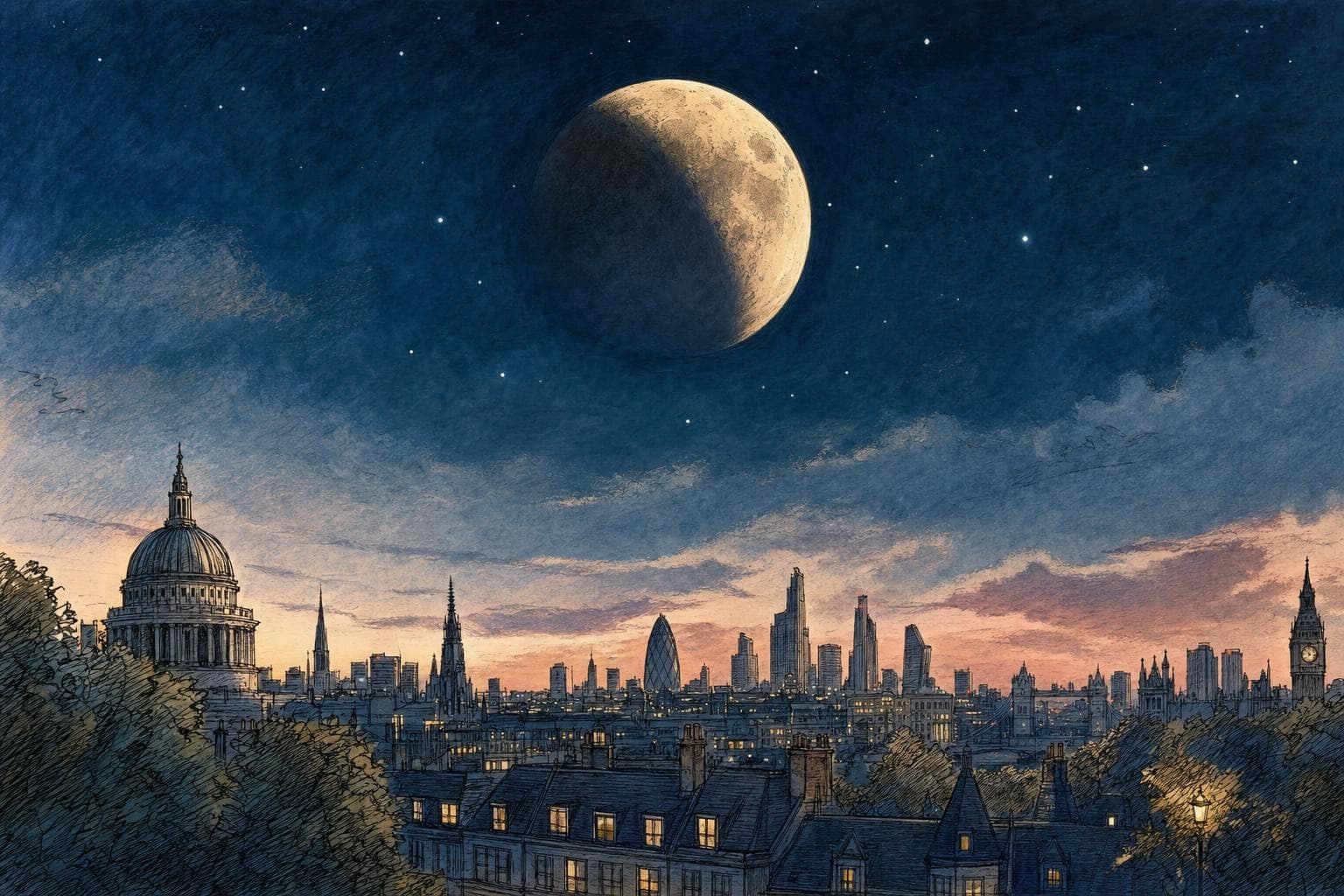
Illustration generated with GPT Image 2; it is not a documentary image of the eclipse.
The partial lunar eclipse on Friday 28 August 2026 begins at 2:23am BST in the UK, with the partial phase starting at 3:33am and maximum eclipse at 5:12am, according to Royal Observatory Greenwich. It is safe to view with the unaided eye: the real constraints are cloud, a clear south-western horizon and the Moon setting before the astronomical event has completely finished.
What happens, and when should you look?
This is a partial lunar eclipse, not a solar eclipse. Earth moves between the Sun and the full Moon and part of the Moon enters Earth’s darkest shadow, the umbra. NASA lists the August 27–28 event as visible across the Americas, Europe, Africa and western Asia. From the UK, the useful window is the early morning of 28 August because the local clock has already moved into BST.
Royal Observatory Greenwich gives 2:23am BST for the penumbral start, 3:33am for the partial phase, and about 5:12am for maximum. It says roughly 93% of the Moon’s visible surface will be within the umbra at maximum. London moonset is about 6:15am, so the partial phase’s formal end at roughly 6:51am is not fully visible there. Times and horizon height vary across the country, so a city-specific check remains worthwhile.
- The most dramatic UK phase runs from 3:33am BST toward a 5:12am maximum.
- Moonset means the final stages may be below the horizon.
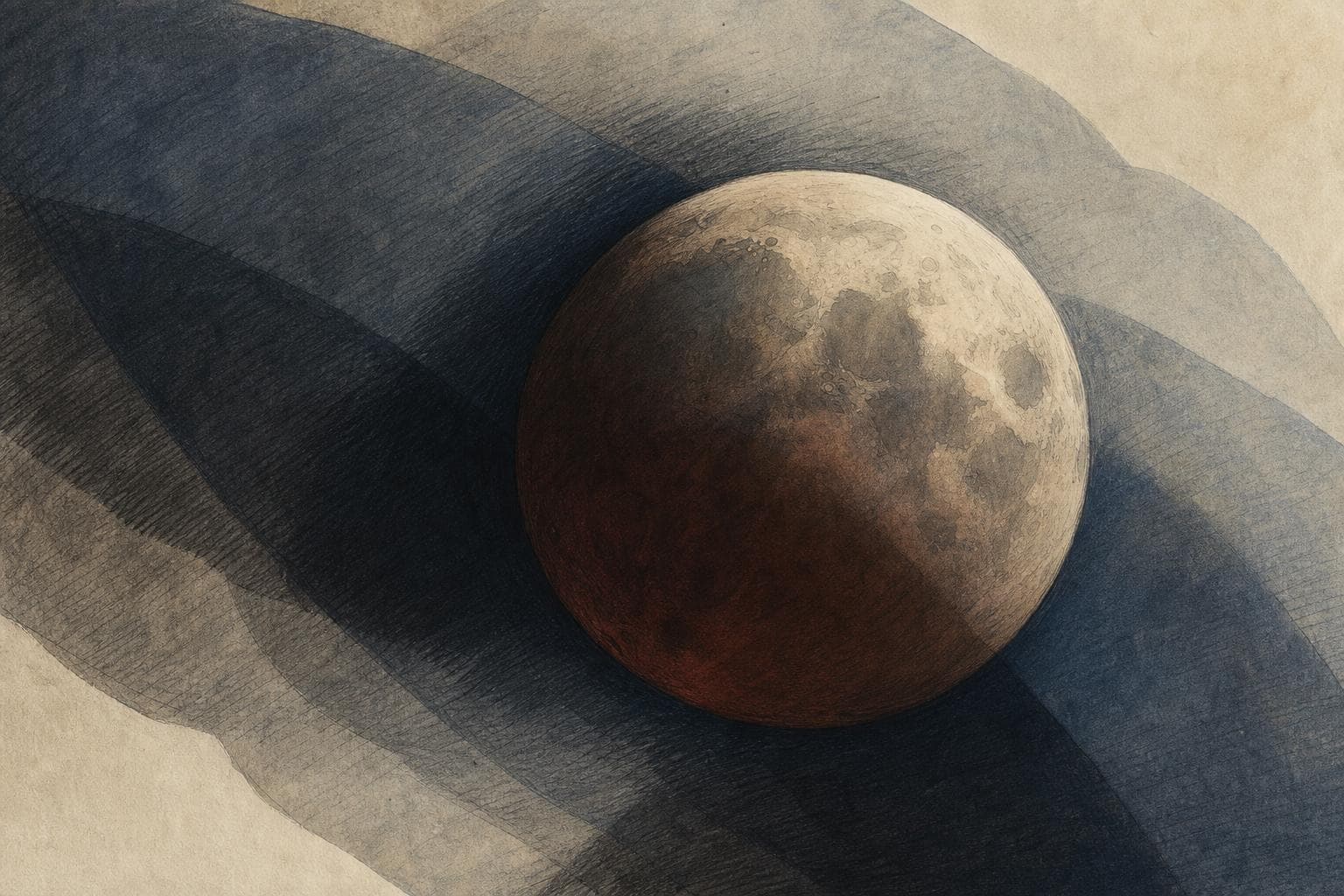
Illustration generated with GPT Image 2; it is a conceptual diagram, not an astronomical chart.
Why a low south-western horizon matters
The Moon will be low as the eclipse deepens. Royal Observatory Greenwich recommends a location with a clear view toward the south-western horizon; buildings, trees, hills and a nearby roofline can hide the Moon even if the sky is otherwise clear. A public park, waterfront or open elevated place may help, but only use a location that is legal, accessible and safe at that hour. Do not trespass or stand near roads to chase a view.
Weather is the other variable that cannot be settled four days ahead. Cloud breaks can be enough for a glimpse, while a detailed cloud map should not be treated as a guarantee. Check the Met Office forecast for your precise area on the evening before and again before leaving. If conditions are poor, an official livestream is a reasonable alternative, but it does not change what can be seen from a local horizon.
- Choose a safe, open view toward the south-west.
- Use a local forecast close to the event rather than relying on an early prediction.
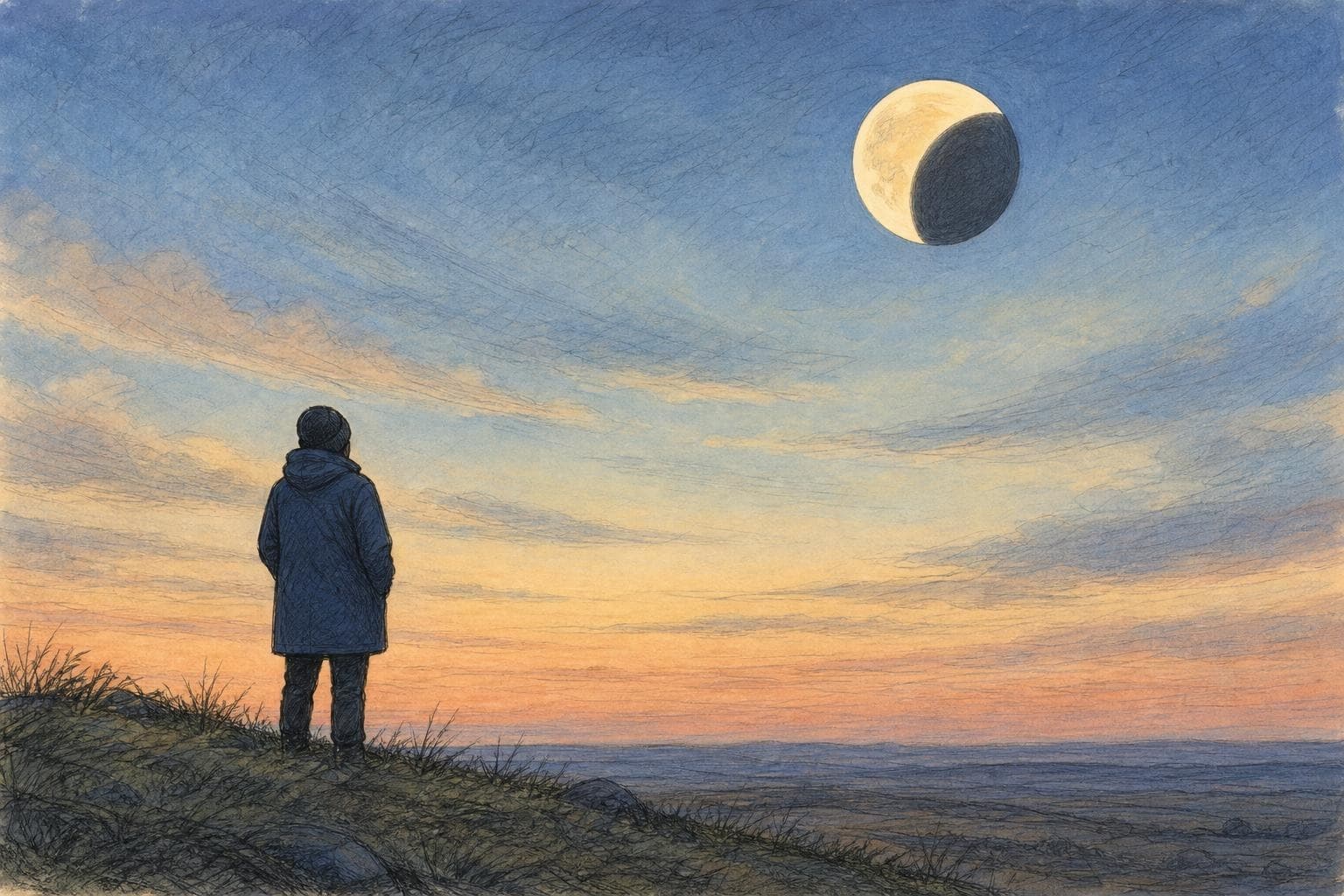
Illustration generated with GPT Image 2; it does not depict a real observation site or person.
No eclipse glasses, but set realistic expectations
Unlike a solar eclipse, a lunar eclipse is safe to watch directly. The Moon is reflecting sunlight rather than presenting the Sun’s bright disc, so no special eclipse glasses are required. Binoculars or a small telescope can add detail, but they are optional. Never use solar-viewing advice designed for the 12 August solar eclipse as a requirement for this event; the safety guidance is different.
A partial eclipse does not turn the whole Moon black. The portion inside the umbra can look coppery or reddish because sunlight passing through Earth’s atmosphere is filtered and bent toward the lunar surface, while another portion remains illuminated. The precise colour, contrast and visibility depend on sky clarity and your eyes rather than on a promised photographic result. Keep expectations modest and enjoy the changing shadow rather than hunting for an exact image.
- A lunar eclipse can be viewed without solar glasses.
- It is partial: expect a changing dark and sometimes reddish section, not total darkness.
Illustration generated with GPT Image 2; it is not a product endorsement or a real-time weather view.
A simple plan for the morning of 28 August
Set an alarm before the partial phase, check the latest local cloud forecast and allow time to reach a safe viewing point. Bring warm layers, a charged phone and a red-light setting if possible; bright white screens reduce night vision. If you are using binoculars, practise focusing on the Moon beforehand. Families should decide whether the late hour is suitable for children rather than treating the event as an obligation.
This guide was checked on 24 August 2026 and its key timings should be verified again on the day with an authoritative local source. Update the plan if an official weather warning affects travel. The event itself is a four-day freshness window; the explanation of how a partial lunar eclipse works remains useful after it has passed.
- Recheck weather and local horizon conditions on the night.
- Follow official weather warnings before travelling.
Source ledger
4 sources checked
- 01NASA ScienceFuture EclipsesAccessed August 24, 2026
- 02Royal Observatory Greenwich28 August 2026 partial lunar eclipseAccessed August 24, 2026
- 03timeanddate.comAugust 28, 2026 Partial Lunar Eclipse in LondonAccessed August 24, 2026
- 04Space.comPartial lunar eclipse August 2026: Where will it be visible from?August 22, 2026
No third-party news image or video was copied for this article.